The person, the position, and the method.
Adrian Keith Skane, Producer & CPA
Founder — Night Sun Productions
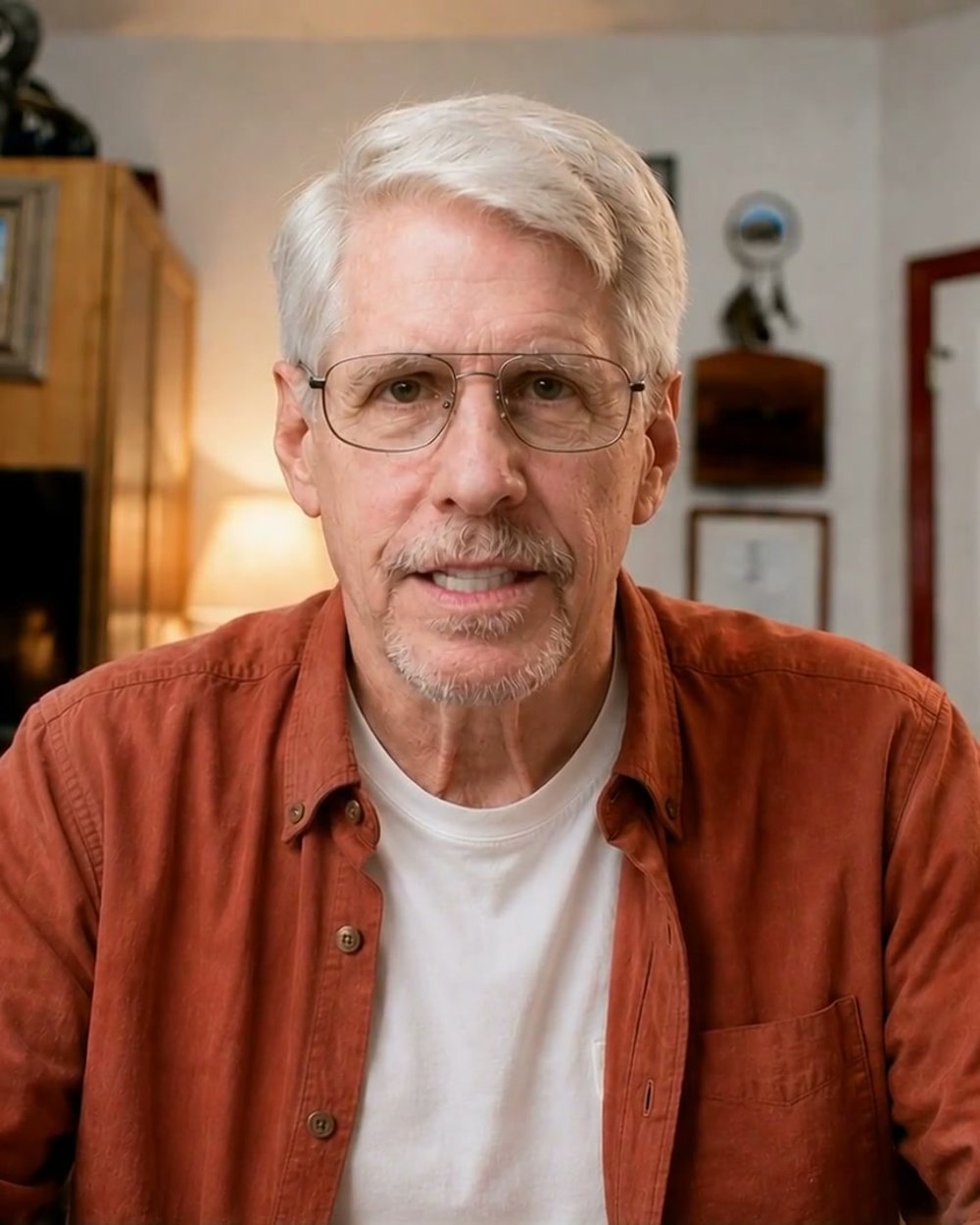
- Producer on every film this studio makes — the client is who I answer to
- CPA for fifty years — actively licensed in California, Florida, and Maryland
- Fifty years inside professional service firms; my own firm until I sold my interest last December
- Ten thousand-plus client interviews; some families advised across four generations
- Trained at Kenneth Leventhal & Co., then the world's largest real-estate accounting firm
- Decades inside regulated professions, where the advertising rules are real
My end product used to be a tax return. Now it is a film. Everything that comes before it is identical.
I'm Adrian Keith Skane. I have been a CPA for fifty years, I opened my own firm, and I never worked anywhere else again until I sold my interest to my partner last December.
What I actually did for those fifty years was sit across a desk from the person who owns the business and ask questions. Ten thousand times over. How the money is really made. Where it leaks. What he wants the thing to become. Then I did it again the following year with the same people, and again the year after that. Some of those families I advised into a fourth generation.
That is an unusual seat to sit in. Most people who advise a business get a snapshot. I got the whole picture, one year at a time, with the results landing on my desk every twelve months to settle whether what we decided last year had actually worked. Do that ten thousand times and it rewires you. I can hear a business now.
Find out who they really are. Find out what actually matters. Then build the thing that says it. That was always the job. The tax return was only where mine used to come out.
A tax return tells a story. Any accountant who has been at this long enough can read a set of them like a diary: the year he overhired, the year he bought the building, the year he quit taking a salary and hoped nobody would notice. Twelve months of decisions, told in numbers.
A film tells a story too. Same interview. Same listening. Same judgment about what matters, what is noise, and what a professional firm must never say out loud. The only real difference is who is allowed to read it. The tax return's story is told to the government and to you. The film's story is told to every person you are trying to reach.
That is what a producer does, and it is the title I use here. I am not the artist. I am the one the client hires, the one who decides what gets made, and the one who answers for it when it is finished.
Founder to founder.
The person who hires me is almost always a founder — or a co-founder, or the founder's son or daughter still running it the way the old man thought about it. You know your business better than anybody alive. I know businesses. Put those two people in a room and nothing has to be explained twice. You should not have to teach a twenty-six-year-old account executive what a partnership buy-in is, or why that particular case is never going in a video. And where I do not know your corner of it, I know exactly which question to ask next.
And one thing about the price, because it decides every invoice we send.
I have never once asked what the most is that I could charge. I look at what it costs to do the work properly, and at what the work is worth to the person buying it, and I set the price off those two numbers. Fifty years of that has left a great deal of money on the table. It is also why clients stayed with me for thirty years at a stretch. I do not waste money or time — not mine, not my staff's, and not yours. You are handing me a budget out of a business you built with your own hands, and I intend to spend it the way I would spend my own.
The three rules I give people
Rule one. Start a business that makes economic sense — and that you are actually built to run. The numbers have to work before anything else does, and you need three things to reach profitability: the skills, the temperament, and the money. Missing any one of them is enough to end it. The good news is that you can find out faster than you ever could before — a business plan, a website and a marketing plan can be built and tested in under three months, for a reasonable number. You no longer have to bet the house to learn whether the idea is any good.
Rule two. Founders are optimists. Get somebody who will tell you the truth. Smart people can talk themselves into almost anything, because they can picture exactly how it would work. Picturing it is not the same as doing it. You need somebody who knows you, knows the business, and will say the hard part out loud — an honest count of what you stand to gain, what you stand to lose, and what it will actually take. That is not pessimism. It is the only way an optimist gets to keep being one.
Rule three. Do not ride a mission-critical mistake all the way down. Every business makes mistakes. The ones that kill you are the ones nobody stopped. Modern marketing will tell you inside a week whether something is working — not at the end of the quarter, when the money is already gone. When the potential loss is catastrophic, cut early and change direction. You are still in business on Monday.
Why we built all of this on ourselves first
Everything you are looking at — this site, the writing, the video, the systems running behind it — we built in under three months, with our own team, using the same tools we would point at your business. That is not a boast. That is Rule One, and you are standing in it.
A production studio is a professional service firm. The deliverable is a film instead of a return, and everything that determines whether it is any good is identical. Somebody has to hire well. Somebody has to train relentlessly and hold a standard on the days when letting it slide would be easier and nobody would notice. Somebody has to take care of the client like the relationship is going to run twenty years, because the good ones do. That is what I have spent my working life doing, and it is why our studio team is not a line item to me. Those are my people.
A note on the letters after my name
You will see “Producer & CPA” on this site. The CPA is there because it is the lens I have spent fifty years looking through, and it is where the compliance instinct, the structure, and the straight talk about what a dollar actually returns all come from. But on this site I am not acting as your CPA, accountant, or advisor. Nothing here is tax, accounting, legal, or financial advice, and nothing here creates a professional relationship. Night Sun Productions is a content and production company, and my job inside it is producer.
AI video is three years old. Reading a business takes fifty.
Almost nobody came through the door we came through.
Almost everybody producing AI video today came through one of two doors: production and design, or software. Both are real trades, some of that work is very good, and the tooling has become remarkable in a very short space of time. Almost nobody came through the door we came through.
What that door gives you is not opinions about what marketing works. It is ten thousand interviews and the results that came in afterward — fifty years of sitting with the same firms, with the actual numbers arriving every twelve months to settle the argument one way or the other. Anybody can be taught to cut a video, and the tools now do a great deal of it. Knowing what a professional firm should say, what it must never say, and what its buyers are actually listening for is not a tool. That is not a knock on anyone. It is where we are standing, and it decides what we make.
“So why is a CPA producing the films?”
Because that is exactly who built this industry.
Because that is exactly who built this industry. Carl Laemmle, who founded Universal, was a bookkeeper. Adolph Zukor of Paramount was a furrier. Samuel Goldwyn sold gloves. Louis B. Mayer dealt scrap metal out of a cart. Harry Warner was a cobbler, and then a butcher. Not one of the men who built the studios still standing today was an artist. They were operators who understood cost, risk, and delivery — and who then went out and hired the artists.
That is the job I am doing here, and it has a name: producer. Find the talent. Pay them properly. Hold the standard on the days when nobody is looking. Control the cost. Answer to the person who is paying for it. And make sure the finished thing actually reaches the people it was made for. I did precisely that inside a professional service firm for fifty years. The product is different. The job has not changed at all.
What happened the one time the artists ran a studio themselves
In 1919 four of the most gifted people who have ever worked in film — Charlie Chaplin, D. W. Griffith, Mary Pickford and Douglas Fairbanks — founded United Artists so that the people who made the work would control it. It was a principled idea and it produced extraordinary pictures. Richard Rowland of Metro greeted the news with the line that followed the company forever: "the inmates are taking over the asylum."
They were not naive about it either. They brought in William Gibbs McAdoo — a lawyer and a former Secretary of the Treasury of the United States — as advisor with a twenty-percent stake, and hired Hiram Abrams to actually run the place. The business was still the hard part. Without public stock the company lived on weekly prepayments from theater owners, and across its first five years it released roughly five pictures a year against a founding ambition of five per star per year. United Artists spent decades moving in and out of trouble. It was finally made to work in 1951 by Arthur Krim and Robert Benjamin — two lawyers — who ran it with no studio lot at all, financing independent producers the way a bank finances a builder.
Two lessons come out of that, and I take both of them seriously. The artists were right: the work belongs to the people who make it, and it should be protected from anyone who would sand it down. But the studios that lasted a century were the ones where somebody who understood money, discipline and delivery stood behind the people making the work — and made sure it actually reached an audience.
Founder biographies are drawn from the public historical record.
One producer. One studio. One machine between them.
Most agencies spend your money on the layers between the person who decides and the person who builds. We took those layers out.
Judgment and the final cut
Every engagement is planned, supervised and signed off by the producer — a CPA with fifty years inside regulated professions, who knows what a compliance officer will flag before you do. You are never handed to someone learning your business on your dime.
A real production team, not a queue
The people who cut your film and build your digital twin work out of our own studio in Central Luzon, paid above their market. They are not a marketplace we buy hours from, and we would rather introduce them than pretend they do not exist.
AI, used to its full extent
Drafting, cleanup passes, captioning, versioning, twin and voice delivery, turning one sitting into a month of assets. It does not make the work cheaper by making it worse. It deletes the hours that never needed a human.
Where we use AI — and where we refuse to
Any shop that tells you it does not use AI in 2026 is either behind or not being straight with you. Here is our line, in writing, so you can hold us to it.
- First drafts of scripts and copy — then rewritten by a person who knows your field
- Rough cuts, cleanup passes, captioning, and format versioning
- Digital twin and voice delivery, disclosed every single time
- Turning one sitting into a month of finished assets
- Research, transcription, and digesting long source material
- Final approval — a named human signs off on everything, always
- Anything naming a real patient, client, or matter
- Claims, figures, or compliance language without a human-verified source
- Passing a synthetic presenter off as a live person
- Strategy — the judgment is the part you are actually paying for
- Anything we would not be comfortable explaining to your regulator
We chose a lane on purpose.
Professional service practices, and nothing else. If that is you, you already know it — so rather than read you a list of professions, here is the shape of the firm we are built for. Four things, and most of our clients have all four.
What you sell is judgment
There is nothing to photograph. The product lives in your head and in your people, and it is the reason nobody has ever made you a film that worked. It is also the reason one done properly is worth so much.
You are careful what you say
Either regulated outright, or reputation-sensitive enough that you behave as though you are. We have spent fifty years inside that, which is why we know what to leave out before anybody has to ask us to.
Your best work arrives by referral
Somebody who trusts you told somebody else. That is a wonderful way to grow and a terrible way to control — and giving your clients something to hand over is most of what a film is actually for.
A founder still decides
Not a marketing committee and not a brand team. The person who built it, or the son or daughter carrying on the way it was built. Founder to founder is not a preference here. It is the whole method.
Corporate and internal work — training libraries, onboarding and procedure modules, internal communication — is scoped and quoted separately, and follows the same method.
Some firms should buy the film and stop.
Closer to the portrait in the lobby than to a campaign.
There is a second reason a professional firm makes a film, and no agency will sell it to you, because it ends with them not being paid every month. Call it the institutional film. It is not built to generate calls. It is built to say, permanently and well, what the firm is, where it came from, and what somebody is dealing with when they deal with you. Closer to the portrait in the lobby than to a campaign — and like the portrait, not supposed to change every quarter.
Who is actually watching it — and the view count is close to meaningless
Watches it once, early, and revises his estimate of how this is going to go — not because the film makes a claim, but because it shows the bench, the years, and how the firm talks about a case.
He hired you on a referral and could not have said why. Now he can — and can forward something to the friend he was going to recommend you to anyway.
Watches it before the interview and arrives understanding the heritage of the firm. Recruiting is the use clients discover second and value most.
A film honest about who the firm serves does quiet work — the wrong caller watches four minutes and decides not to phone. Twenty minutes of partner time, kept.
A firm like that needs the film to exist, be findable, and stay accurate. It does not need a posting schedule, and we are not going to sell you one.
What it does need, occasionally: a refresh when a name partner joins or retires, a recut for a recruiting page, someone to check it has not gone out of date. A call once a year and an invoice when there is work — not $750 a month for a machine nobody is using.